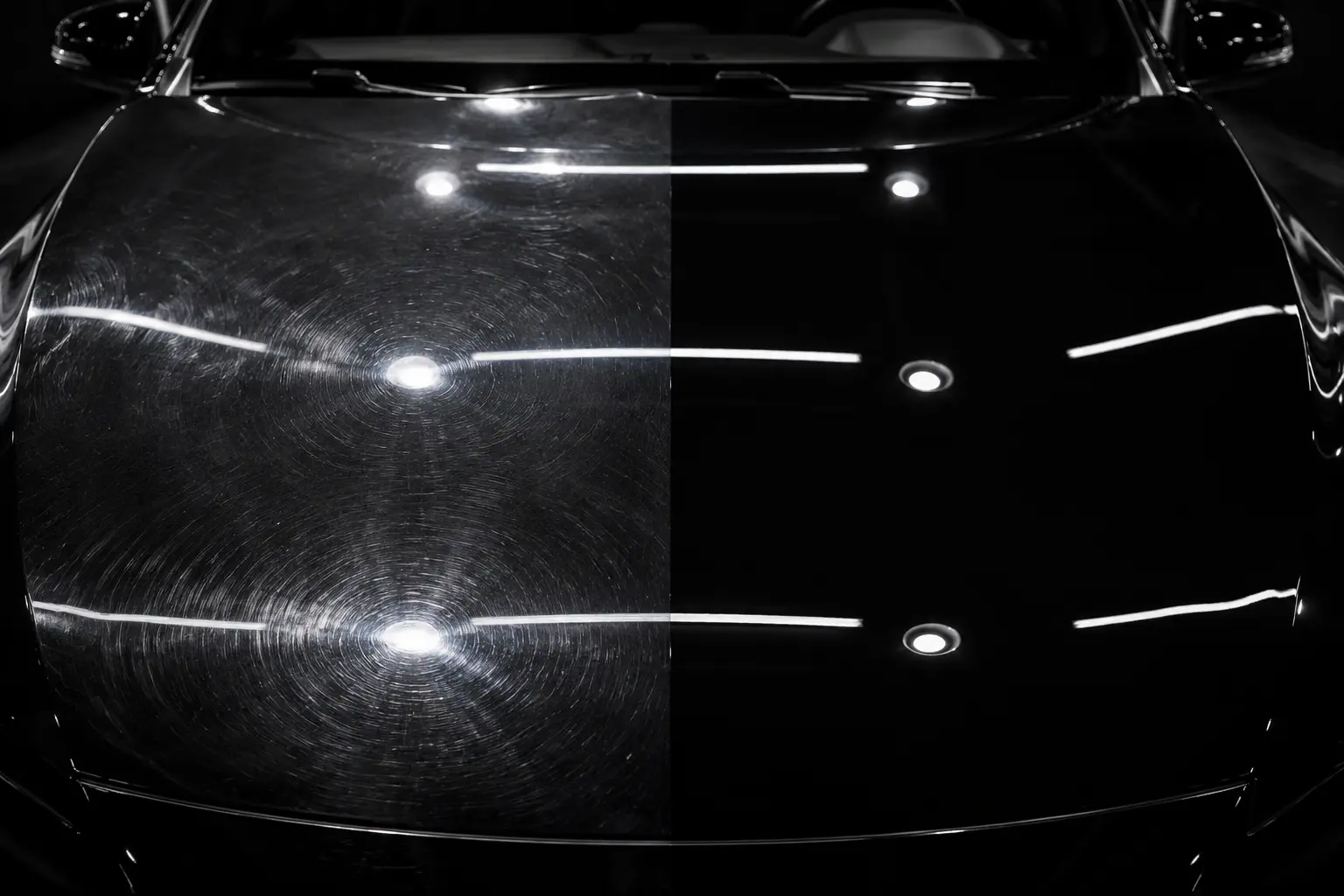
Swirls and haze
Wash-induced micro-marring that dulls reflections and makes dark paint look gray under direct light.
At our Delmont studio, professional paint correction targets swirls, haze, oxidation and light scratches for Pittsburgh- and Murrysville-area drivers. We tailor the polishing plan to your paint and the result you want.
Pristine Clean performs paint correction in Murrysville and the greater Pittsburgh area to reduce swirl marks, wash marring, oxidation, water spotting, haze and other visible clear-coat defects. Each vehicle is inspected under focused lighting so the polishing process can be matched to the paint instead of using the same aggressive process on every car.
Paint correction is also a critical preparation step before many ceramic coating installations because the coating locks in the appearance underneath it. We serve clients from Murrysville, Greensburg, Delmont, Export, Monroeville and surrounding Western Pennsylvania.
Every correction service begins with a thorough exterior wash and decontamination. The difference is how much polishing time and defect removal the vehicle requires.
Best for maintained paint needing deeper cleansing, restored gloss, minor swirl reduction, and fresh protection.
For newer or well-kept vehicles with light-to-moderate swirling and a need for stronger clarity improvement.
A two-step process for heavier swirling, dullness, oxidation, water spots, and visible scratches.
For severe defects, texture refinement, recent paintwork, restoration projects, or highly demanding finish goals. In-person assessment required.
Wash-induced micro-marring that dulls reflections and makes dark paint look gray under direct light.
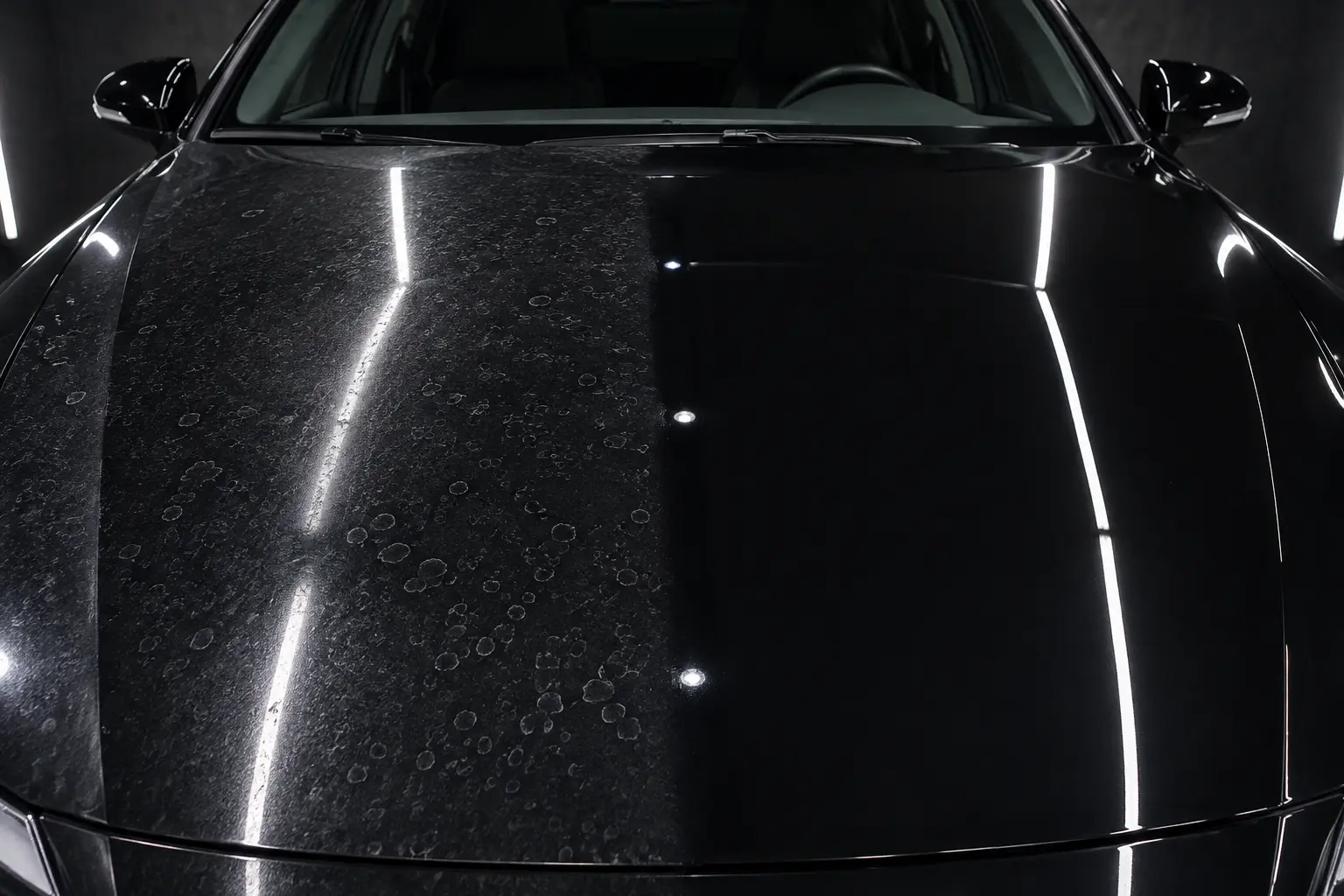
Mineral deposits and etching that may require anything from polishing to more aggressive correction.
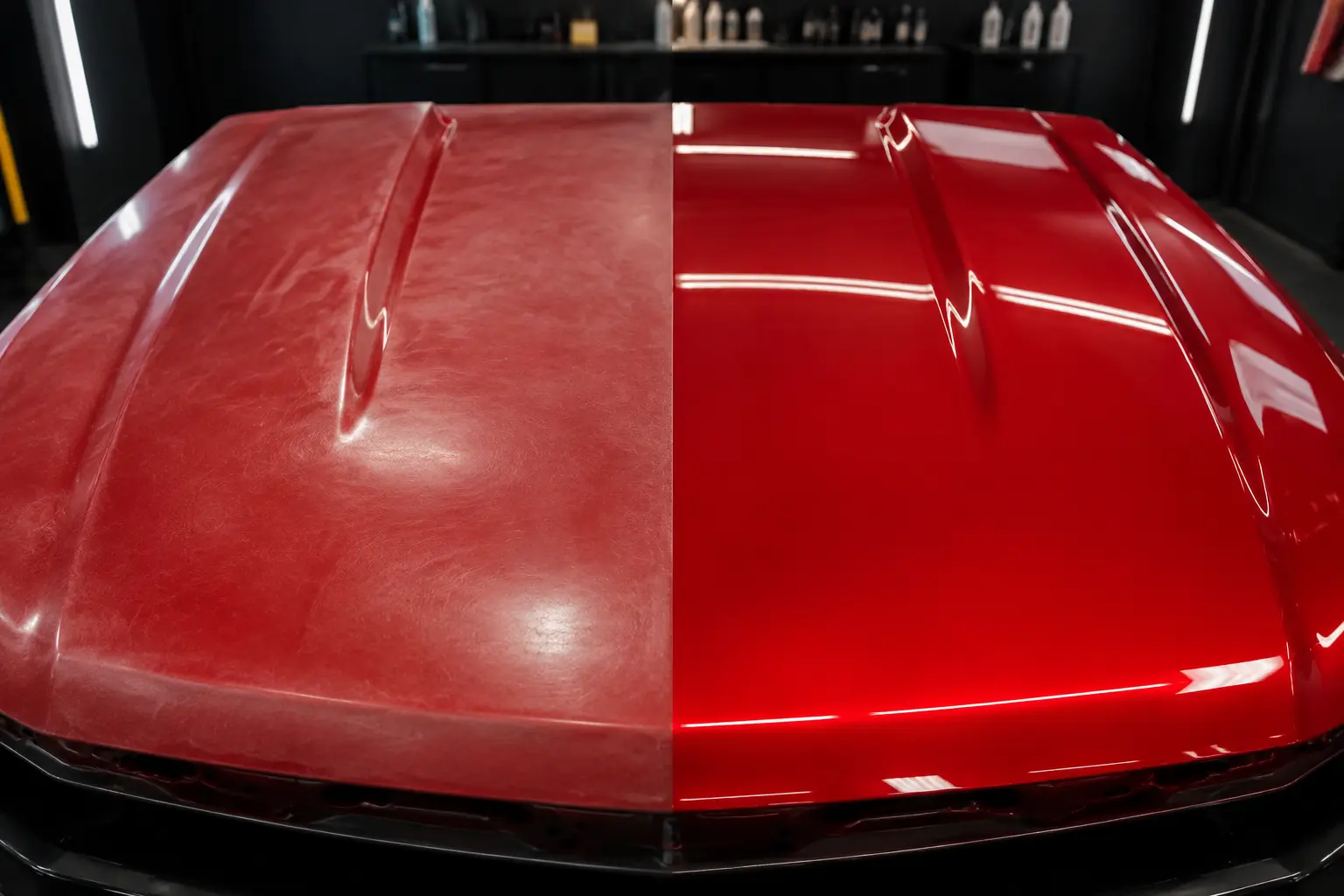
Loss of depth and clarity caused by age, exposure, improper care, or previous abrasive work.
The goal is strong visual improvement without removing unnecessary clear coat. Deep scratches should not be chased when doing so could compromise the finish.
Move the slider to see the real-world transformation of a vehicle we performed paint correction on.
Drag left or right to inspect the transformation. Before is always on the left; after is always on the right.
Remove loose contamination and expose the true condition of the paint.
Iron removal and clay treatment create a smooth working surface.
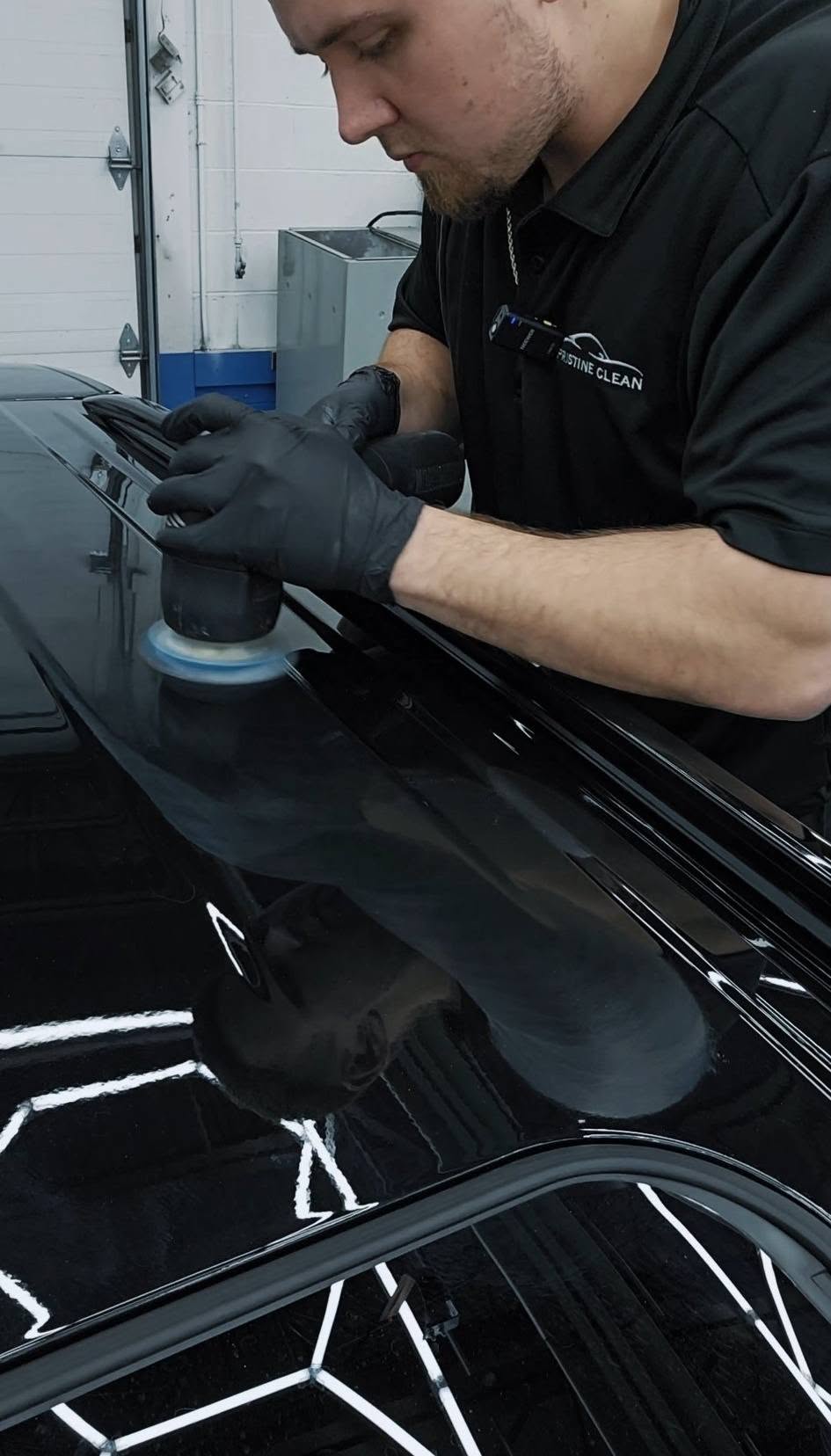
Machine polishing is calibrated to the paint and desired outcome.
The refined finish is sealed or upgraded to a ceramic coating.
Correction is a controlled process, not a promise to chase every mark at any cost. These answers explain what professional polishing can realistically accomplish.
No. Swirls, haze, oxidation, water spotting, and many surface-level scratches can improve dramatically, but a scratch that has cut too deeply into the clear coat should not be chased aggressively. We prioritize the best safe visual improvement while preserving the paint.
The amount varies with the paint system, defect severity, pad, polish, machine, and number of correction stages. We assess the surface and use the least aggressive combination that produces the needed result, with added caution around edges, body lines, and previously repaired panels.
The defects removed during correction do not simply return, but new swirls and scratches can be introduced by improper washing, automatic brush washes, or careless drying. Safe maintenance is what keeps the corrected finish looking clear.
A lighter enhancement may be completed in a day, while multi-step correction or specialty wet-sanding can require multiple days. We confirm the expected timeline after reviewing the vehicle, paint condition, and desired result.
Every corrected finish needs protection. A ceramic coating is the best fit when you want longer-lasting gloss, chemical resistance, easier washing, and structured maintenance support. We can recommend the appropriate coating after the correction level is established.
Tell us about the vehicle and the finish you want. Clear photos in direct light help us recommend the safest correction level before an in-person inspection.
This form is dedicated to paint correction. Final pricing depends on paint condition, vehicle size and the result you want.
An in-person inspection may be required for deep scratches, prior repairs or wet-sanding work.
Tell us what you drive, what you want to improve, and how long you plan to keep it. We will recommend the appropriate level of correction and protection without overselling the job.
Paint correction · Pittsburgh & Murrysville
Our Delmont studio performs professional paint correction for clients from Murrysville, Pittsburgh, Monroeville, Greensburg and nearby communities. The goal is to improve clarity and gloss while preserving the clear coat and matching the correction level to the vehicle.
Ceramic coating after correction → Greensburg paint correction →
Original Pristine Clean work
Paint correction before & after → Ceramic coating installation process →
Our Delmont studio provides professional paint correction for Pittsburgh, Murrysville, Monroeville, Greensburg and surrounding Western Pennsylvania. This page is the primary service resource for swirl removal, haze, oxidation, water spots and gloss restoration before ceramic coating or as a standalone correction service.