Paint Correction Before & After: What Professional Polishing Changes
See original Pristine Clean paint-correction work and learn how swirl marks, haze and finish defects are evaluated and refined before protection.
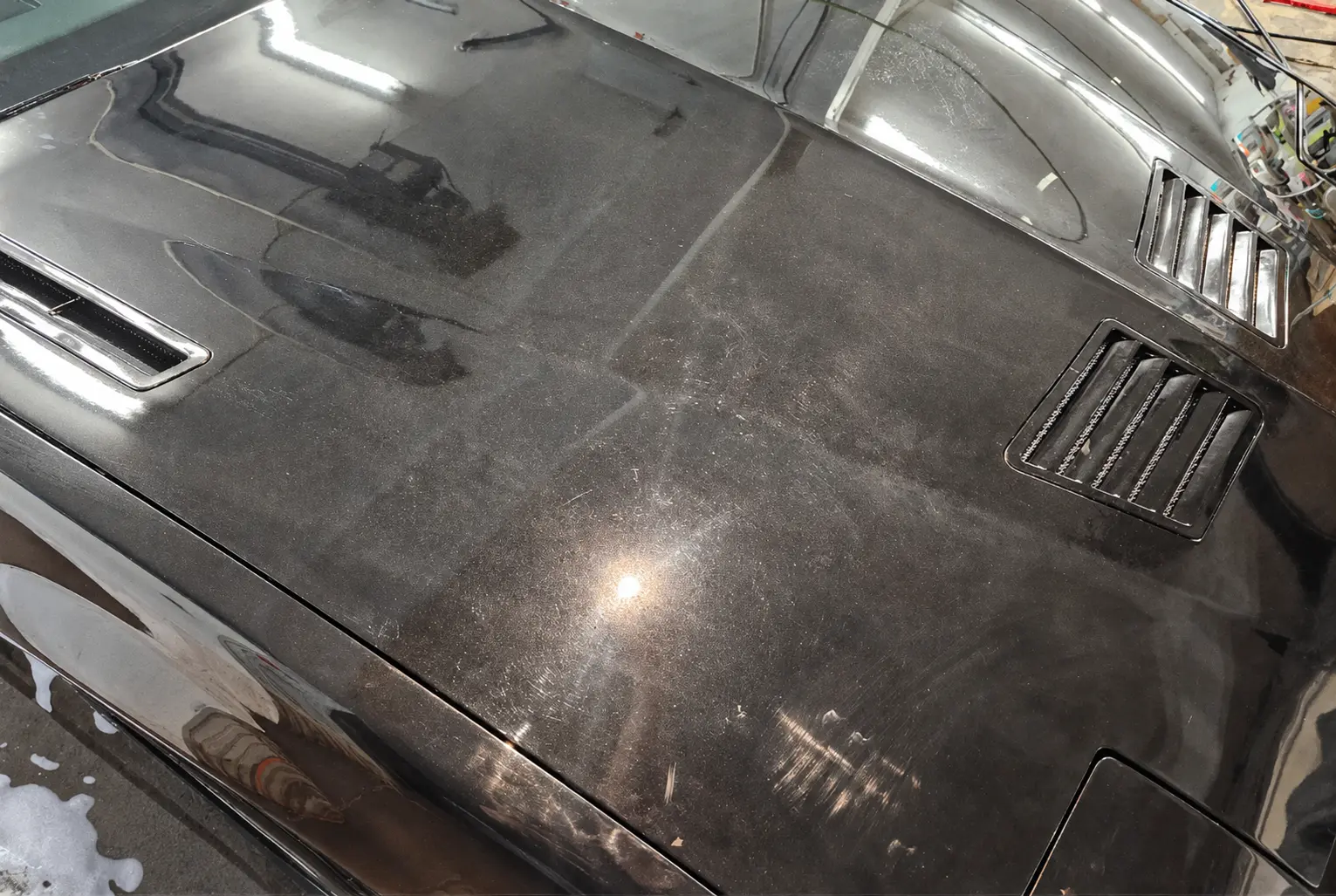
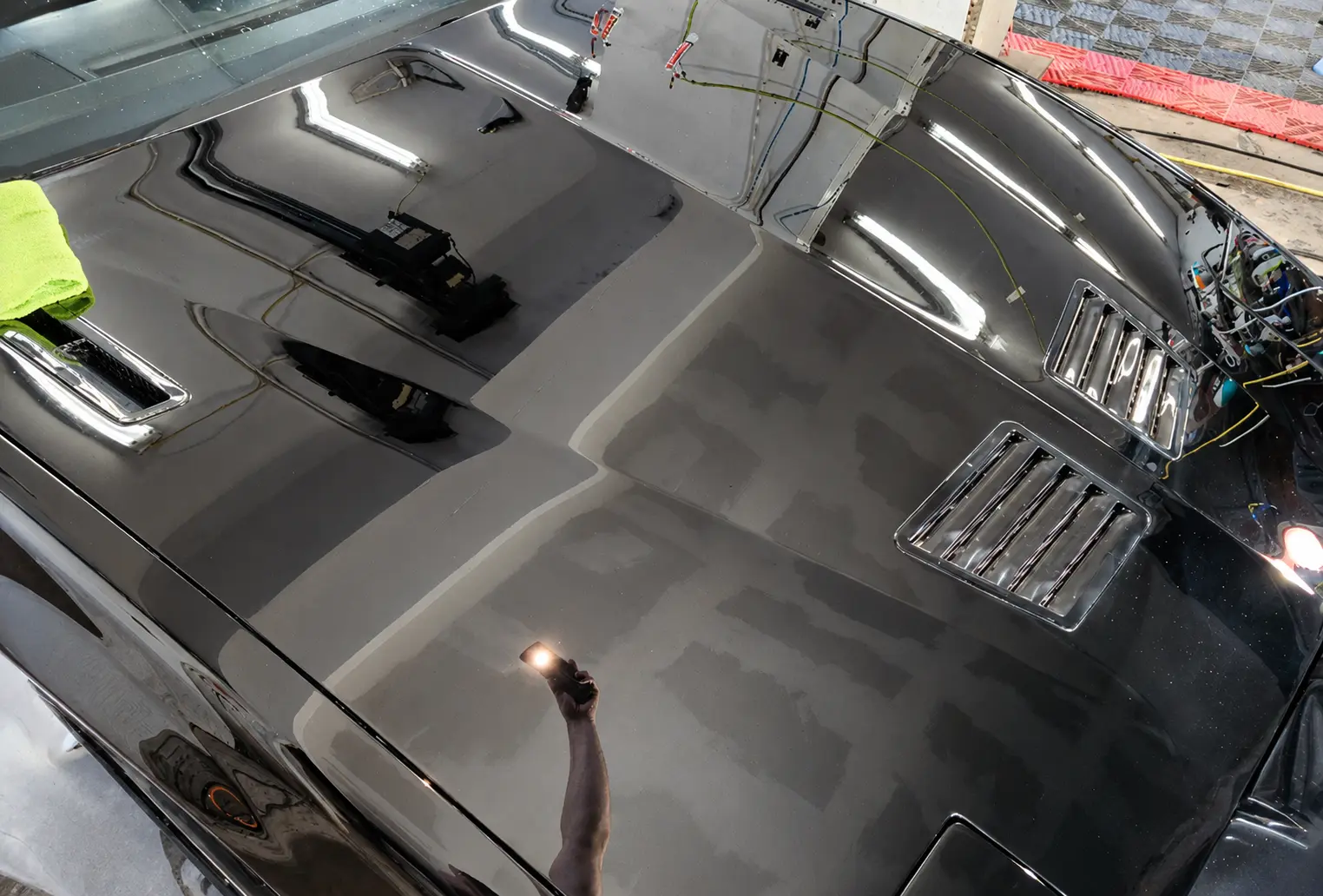
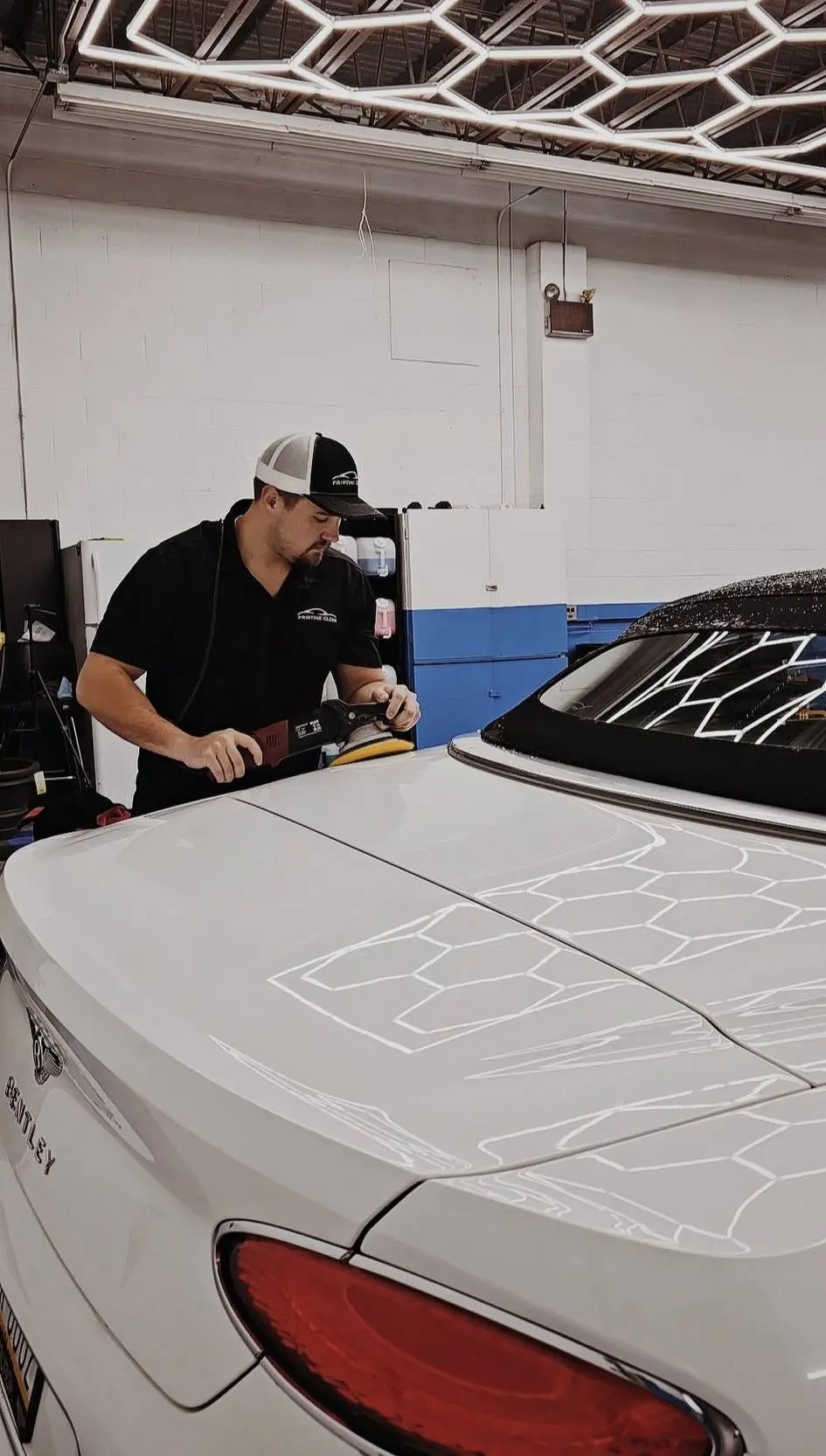
Why inspection lighting matters
Swirls, haze, sanding marks and isolated scratches can look completely different under diffuse shop lighting than they do in direct sunlight. Focused inspection lighting helps reveal the real condition of the clear coat before deciding how aggressive a polishing process should be.
The correction level should match the paint
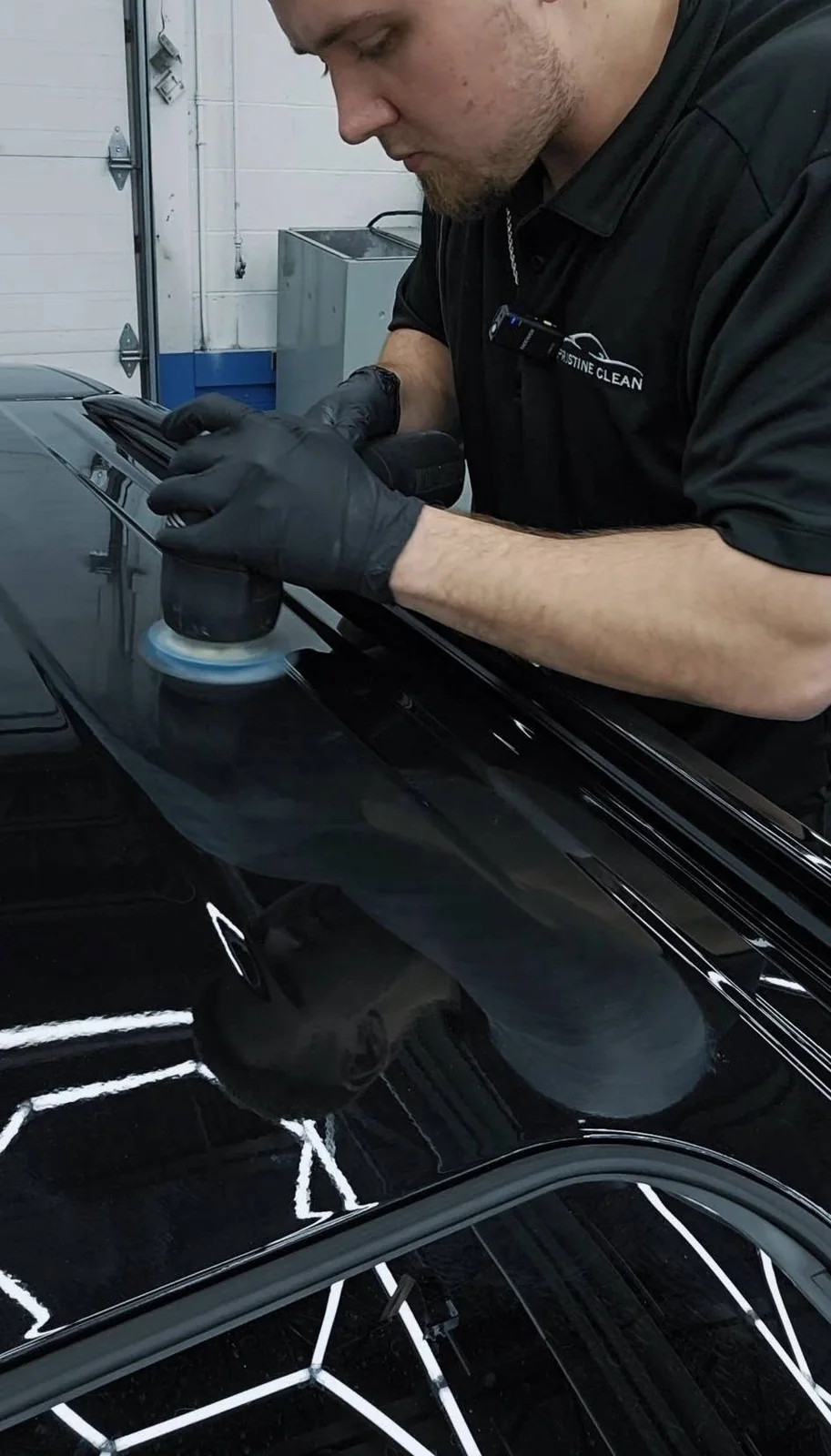
Not every vehicle needs a multi-stage correction. A lightly marred newer finish may respond well to a one-step polish, while heavier defects can require separate cutting and finishing stages. Paint hardness, previous repairs, panel access and defect depth all change the plan.
Why some scratches should remain
A deep scratch that extends too far into the clear coat should not automatically be chased until it disappears. Preserving paint thickness matters. A responsible correction can reduce the visual impact of deeper defects while leaving enough clear coat for long-term durability.
Correction before ceramic coating
Ceramic coating does not hide swirls. Because coating preserves and enhances the appearance underneath it, the defects worth correcting should be addressed before protection is applied. That is why paint preparation is part of the coating conversation rather than an unrelated add-on.
Want us to evaluate your vehicle?
Send the year, make, model and what you want improved or protected.
Request a quote